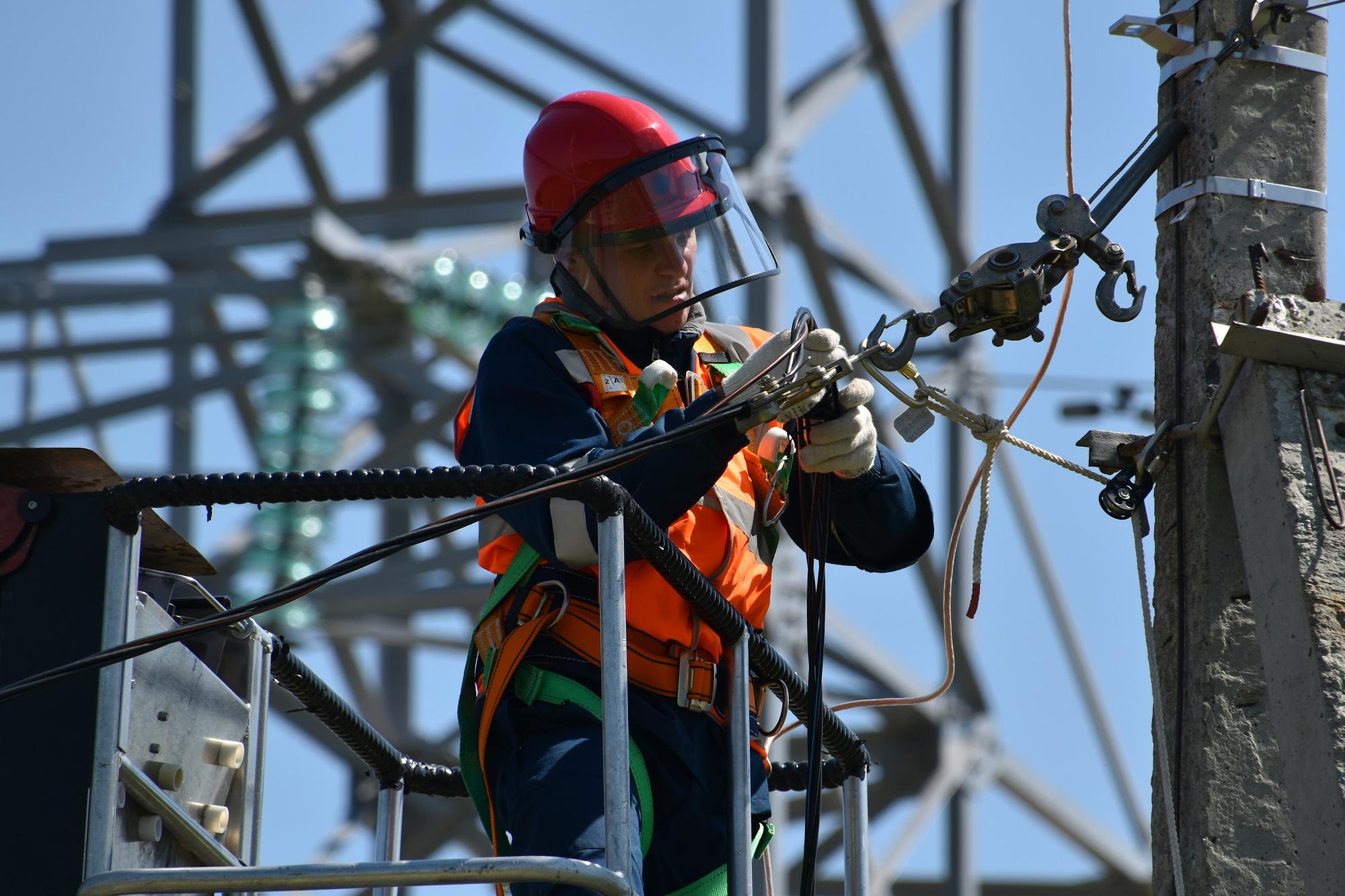
Utility workers have never had an easy job. Long hours, foul weather, and the occasional angry customer come with the territory. But a recent report out of La Crosse, Wisconsin, shows just how far “angry customer” can escalate.
Employees of Dairyland Power Cooperative say they’ve seen a sharp increase in violent threats tied to the company’s proposed MariBell transmission line. This roughly 140-mile, high-capacity project would run from Marion, Minnesota to Bell Center, Wisconsin, eventually linking up with the proposed BECI line. Dairyland hasn’t even filed its formal application with the Wisconsin Public Service Commission yet; the project is still in the public comment phase, and already the company says threats online have “spiked,” in the words of its CEO. In one especially alarming incident, a property owner reportedly pulled a gun on Dairyland employees who were simply working on existing power lines, unrelated to the new project.
This isn’t just a Wisconsin story. As infrastructure projects, including power lines, pipelines, data centers, and wind and solar farms, increasingly become flashpoints for local opposition, the employees carrying out that work are absorbing a level of public anger that has nothing to do with their day-to-day job. Linemen, customer service reps, land agents, and field technicians are being treated as stand-ins for corporate decisions they didn’t make and, in some cases, projects that haven’t even been approved.
For employers, this raises an urgent question: how do you keep employees safe when the source of the danger is the public itself?
Why This Matters Beyond One Utility
Threats against frontline workers tend to spike whenever a company becomes the public face of a controversial decision, whether it’s a rate hike, a land dispute, a service cutoff, or a store policy. Retail workers, healthcare staff, government employees, and utility crews have all reported similar patterns in recent years. The Dairyland case is a useful reminder that this risk isn’t hypothetical or rare; it can escalate quickly and follow employees into the field, not just into their inboxes.
Employers who wait until a threat becomes a crisis are already behind. Building a proactive safety framework, one that treats threats against employees as seriously as any other workplace hazard, protects people and reduces liability.
Safety Tips for Employers
1. Establish a clear threat-reporting process. Employees need to know exactly who to tell, how quickly, and through what channel when they receive a threat, whether it’s a menacing comment online, a hostile phone call, or something in person. A process that’s buried in an employee handbook won’t get used in the moment. Make it simple, visible, and repeated often.
2. Take online threats seriously, not just in-person ones. It’s tempting to dismiss angry comments on social media or in emails as noise. But as the Dairyland case shows, online hostility can be an early signal of escalating real-world risk. Track and log threatening messages, and involve legal or security teams when a pattern emerges, rather than waiting for a single message that crosses an obvious legal line.
3. Brief field employees before they enter contested areas. If a crew is heading into a location tied to a controversial project, a lawsuit, or a public dispute, give them advance notice. Employees who know they might encounter hostility can plan accordingly: travel in pairs, notify dispatch of their location, and have an exit plan.
4. Provide de-escalation training. Not every hostile encounter can or should involve police. Training employees in verbal de-escalation, including staying calm, avoiding arguments about the underlying dispute, and disengaging early, can prevent a tense moment from turning physical.
5. Coordinate with local law enforcement early. Don’t wait for an incident to introduce yourself to local police or sheriff’s departments. When a company knows a project is generating strong public backlash, a heads-up call to local law enforcement and a clear plan for how to reach them quickly can shorten response times if something happens.
6. Consider physical safety measures for field crews. Depending on the level of risk, this might include marked or unmarked vehicles, check-in schedules with dispatch, GPS tracking, or even off-duty security accompaniment in the highest-risk locations.
7. Support employees after an incident, not just during it. A gun pulled on a work crew, or a specific, credible death threat, is traumatic even if no one is physically hurt. Offer access to an Employee Assistance Program (EAP), paid time to recover, and a genuine check-in from management. Employees who feel unsupported after an incident are more likely to disengage, quit, or hesitate to report the next one.
8. Separate the messenger from the message internally, but don’t stay silent publicly. Employees are rarely the ones setting company policy or project routes, yet they bear the brunt of public anger. Internally, make clear that leadership owns the decisions driving controversy. Externally, companies facing this kind of backlash should consider public statements condemning threats of violence, both to support employees and to signal that such behavior won’t be tolerated or normalized.
9. Review and update workplace violence policies regularly. A workplace violence policy written for internal conflicts (coworker disputes, domestic violence spillover) may not adequately address threats from the public. Revisit these policies specifically for scenarios involving customers, community members, or activists, and make sure they include reporting, escalation, and support steps.
The Bigger Picture
Large infrastructure projects will keep generating passionate public opposition. That’s a normal, even healthy, part of how communities weigh in on development. But there’s a hard line between vigorous opposition and violent threats, and companies have a responsibility to protect the employees caught in between. Dairyland Power’s experience is a warning sign other employers, in energy, telecom, government, and beyond, should take seriously now, before a threat becomes something worse.